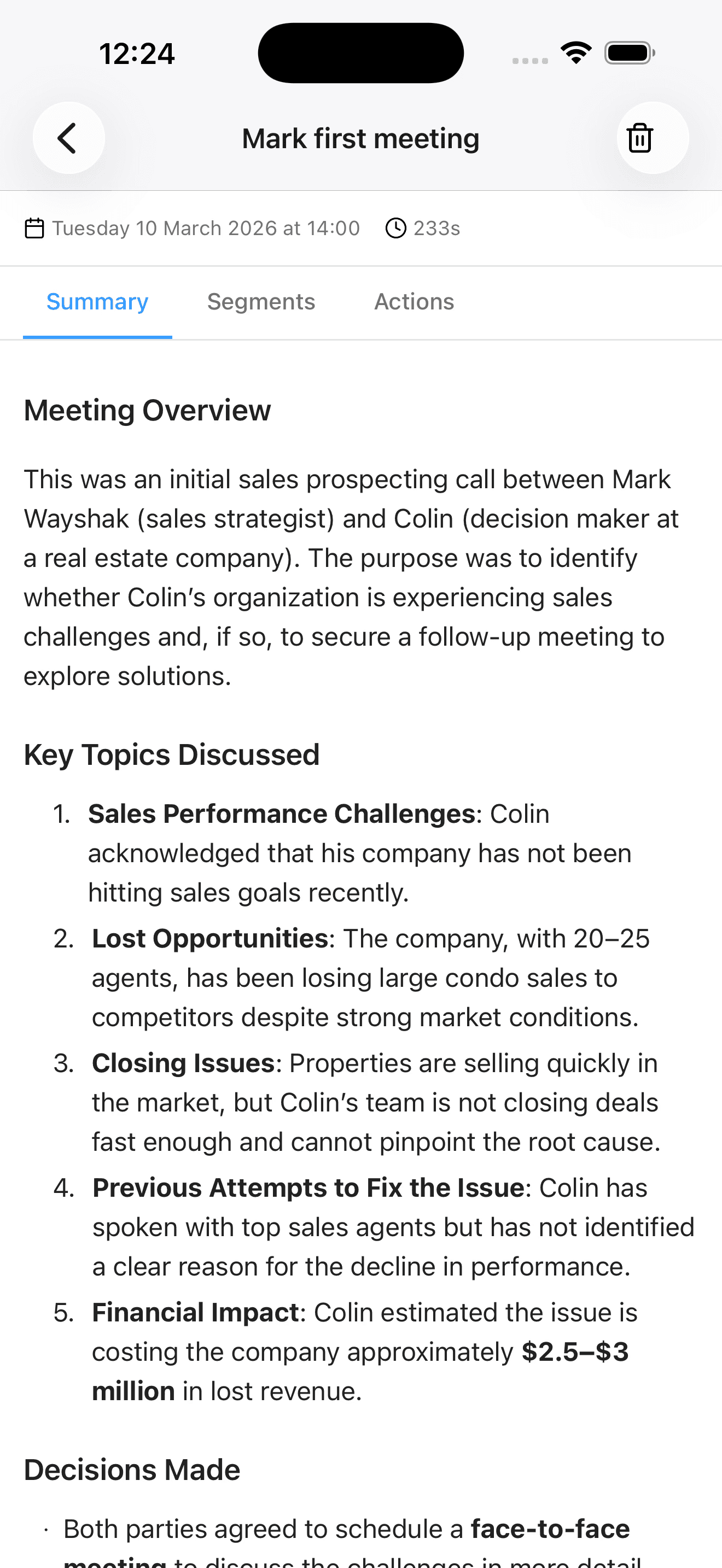
A field sales AI assistant for managers who need current context.

As a field sales AI assistant, Y helps managers receive structured post-visit information without making the workflow impractical for reps. Y turns a rep’s debrief into reviewed CRM context, owned next steps, and visible risks so pipeline conversations can start with evidence.

Y field sales workflow

Pipeline visibility should not depend on Friday reminders.

When customer signals arrive late or as a vague message, managers spend reviews rebuilding the meeting instead of coaching the next move. More chasing increases frustration but not necessarily data quality. Y moves capture closer to the customer interaction and standardizes the minimum context a manager needs, while leaving interpretation and forecast judgment with people.

Input: a consistent post-visit debrief

Managers define the outcomes, customer signals, stakeholders, risks, and next-step detail that matter. Reps then capture those facts in natural language while the conversation is fresh instead of waiting to complete a long weekly form.

Output: current opportunity context

Y prepares a concise visit note and proposed CRM fields that show what changed after the interaction, not only the last saved stage. Unknown information stays distinguishable from customer-confirmed evidence.

Owned next steps and visible risks

The workflow records the action, owner, and due date alongside blockers, timing changes, competition, and stakeholder movement. Managers can spot missing ownership or an unsupported commitment before the next pipeline review.

Less collection, more coaching

With reviewed updates in the systems the team already uses, one-to-ones can focus on deal strategy, skill development, and exceptions. Y supports the information flow; it is not a substitute for a manager’s conversation with the rep.


How managers get reliable field context earlier

The workflow begins with shared data expectations and runs immediately after the visit, not five minutes before the review.

1

Define the minimum useful signals

Agree on the fields and evidence needed after an important meeting. Remove requirements that do not support forecasting, follow-through, coaching, or another clear operational decision.

2

Let reps capture in their field routine

Reps debrief by voice or the available mobile workflow once safely parked. Y structures the result against the configured CRM model without forcing the rep to narrate in form order.

3

Keep review and uncertainty visible

The rep checks account matches, dates, owners, stages, and customer claims before approval. Managers should be able to distinguish a confirmed fact, a rep assessment, and information that remains unknown.

4

Coach from current evidence

Use the reviewed record to focus on stalled commitments, weak next steps, stakeholder gaps, and risks that need action. The manager still validates deal health and updates the forecast according to the company’s process.

How to evaluate field sales productivity software

Judge Y by the quality and timeliness of the team’s operating data, not by a count of generated summaries.

Update completeness and freshness

Track the share of priority visits with a reviewed outcome, next action, owner, date, and risk before the next management cadence. Compare this with the team’s prior baseline rather than relying on anecdotal impressions.

Pipeline decision quality

Sample records and ask whether the information supports a real action: coach the rep, escalate a blocker, adjust resources, or challenge the forecast. Concise evidence is more useful than a long generic meeting summary.

Adoption without surveillance

Explain what data is captured, why it is needed, who can access it, and where human review applies. Sustainable adoption comes from reducing low-value administration, not using AI output as hidden rep monitoring.

Common questions

Is Y another manager dashboard?

No. Y improves how visit context, CRM proposals, and next steps are captured for the systems managers already review. Reporting and forecast views remain in the CRM or other management tools chosen by the organization.

Does Y score or monitor individual reps?

This workflow is designed to structure work around customer visits, not to create an undisclosed surveillance system. Organizations control permissions and governance and should tell reps what is captured, how it is used, and who can see it.

Will AI make our pipeline accurate automatically?

No. Y can reduce capture delay and standardize proposed updates, but accuracy still depends on the rep’s input, source data, field definitions, review, and manager judgment. Missing evidence should not become false precision.

What does a manager need to configure first?

Start with a small set of post-visit signals tied to decisions, a clear CRM field map, appropriate integration permissions, and a review policy. Pilot with representative reps and meetings before adding more required data or automation.

Start pipeline reviews with current evidence

Bring your required post-visit signals, review cadence, and a representative CRM record. The Y team will map what Y can prepare, what reps verify, and what remains a manager decision.

Request a demo